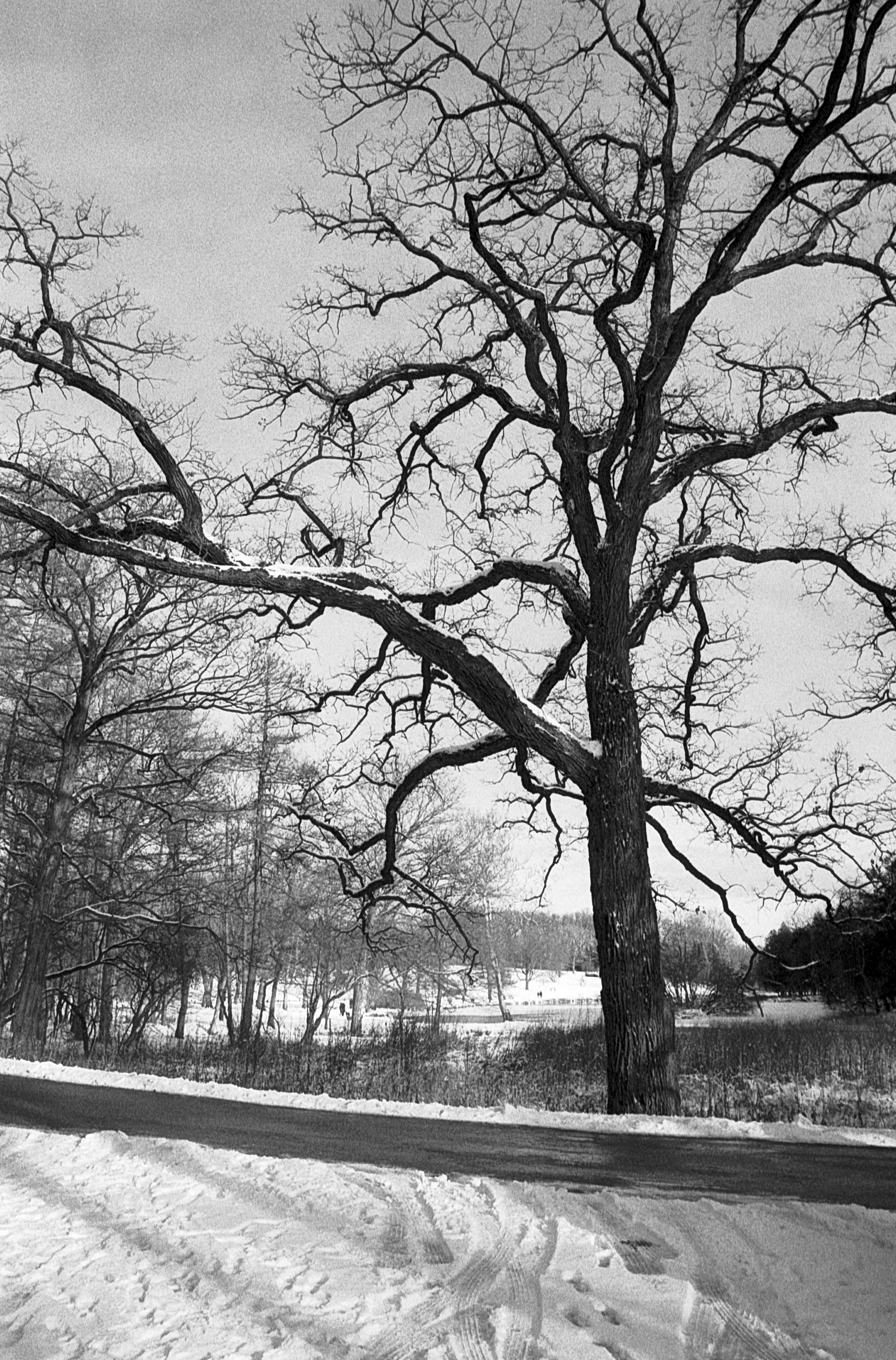
It’s been a long while since this shot was taken, but I know this oak tree so well I’m certain this is Lake Marmo. I can even see the trees on the island, just off to the right of the trunk. They are gone now. All be cut by the arborists, to promote growth of native species.
I love HP5. Such grit and raw contrast, this film is so forgiving. No matter how I screw up the exposure metering, it delivers a result regardless.
This is how it came out of the scanner, no post processing, except cropping it to final size and removing few specs of dust. Speaking of dust, if you are thinking of starting film photography and want to scan at home in budget, your options will be limited. Inevitably, you will land on Epson V600 flatbed scanner and will be lured by its vaunted ICE engine, which removes dust. It certainly does!
How the ICE engine works is as follows: First the scanner takes an image of the film negative using infrared light (where it can clearly see the dust particles on the film), then it takes a regular color scan, then it compares the two and subtracts the difference (dust) from the final image. Dust is as good as gone. Sort of….
Here is where the marketing fools you. The ICE uses infrared light to identify dust. The issue is that B&W film uses silver halide and that one does NOT allow infrared to pass through, so the ICE dust removal engine will NOT work on monochrome film. Only on color.
And that’s a big downer for those who want to dip their toes into film, but do not have the budget to shoot and develop color and want to start with more affordable B&W film photography. Like me.
In that case, be ready to spend some quality time looking for, and removing, all sorts of dust particles.




 The Dark Room
Leave a comment