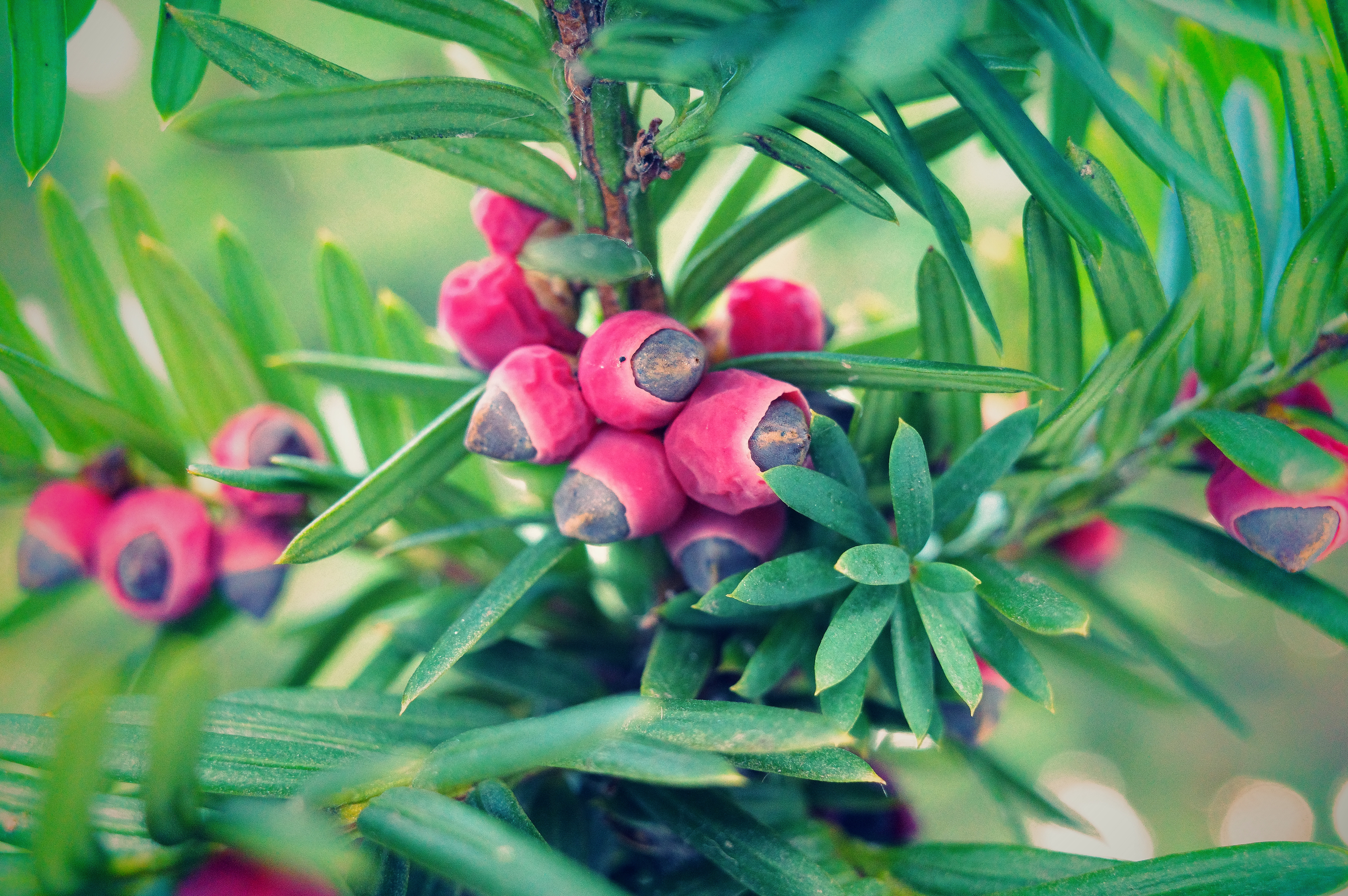
Red waits without cause,
The cold does not ask questions.
Stillness answers all.
#haiku
I admit, I had to try this out of curiosity, yet with extreme caution. Yew berries! The taste is mild, sweet, reminded me of a mix between a watermelon and an apple. Now I know why the birds are so interested in these berries. They are delicious, if deadly when not being cautious.
If you ever want to try, it is at your own risk — BEWARE — these berries’ pits are lethally poisonous. The aril itself (the red juicy part) is edible, tasty and safe. But the seed inside the fruit contains taxine alkaloid which will poison you with severe cardiac effects – arrhythmia, fibrillation and acute heart failure, i.e. death. Birds do not get poisoned, because they never chew the seed and pass it through their digestive system whole and only use the soft nutritious aril.
Yew, is a nice landscape tree, so if you see one nearby, keep kids and pets away.
This chemical compound, taxine, is an alkaloid cardiotoxin, which has the same underlying structure as paclitaxel (a well-known chemotherapeutic). Taxines are chemically different from the notoriously known other substances of the alkaloid family, think opioids, atropine, cocaine, etc.
Old literature talks about 100g of seeds or leaves chewed and swallowed as a lethal dose of yew berries, so it would take quite a few berries to flatline you, but if you or anyone else you know ever ingest these (chewing the seeds), treat it as an acute medical emergency. This is a 911-level event. No joke.






Leave a Reply